Legal form and registered office
The head office of the Federation is located in Bolzano/Bozen (South Tyrol, Italy). Its breeding centre is located at the Fohlenhof Ebbs Stud Farm (Tyrol, Austria).
WHBSF
The WHBSF brings together breeding associations and partner organisations worldwide, creating a strong network dedicated to advancing Haflinger breeding and equestrian sports. The result is an international platform aimed at pooling expertise and setting the course for the future.
Founding
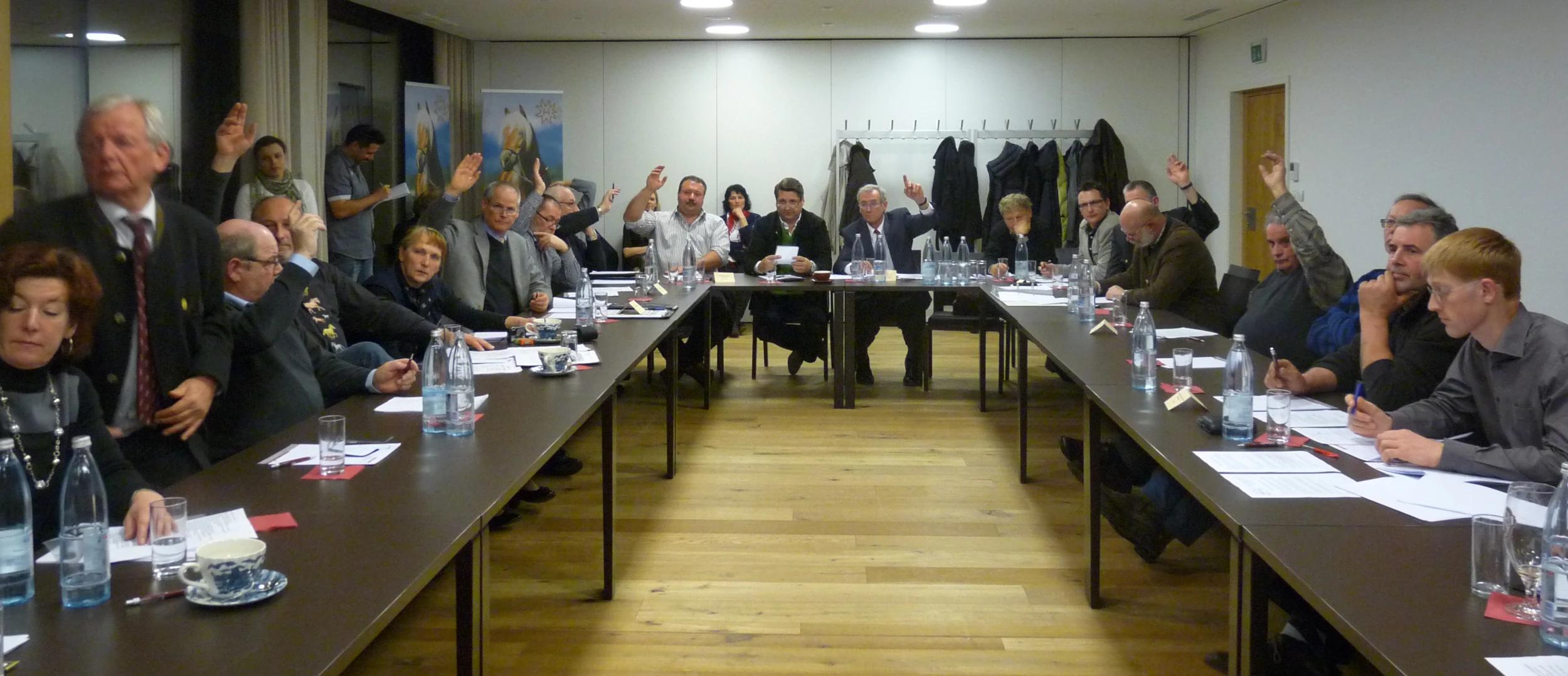
For over a year, the international cooperation in Haflinger breeding was a key topic for the representatives of Haflinger breeders' associations and especially for the officials of the federations in Italy and Austria. On several occasions the negotiations were on the brink of failure, and it is only thanks to the preparatory efforts and the commitment of the federation officials that on 1 February a new umbrella organisation was successfully founded in Ebbs (A). The founding session was marked by an excellent atmosphere which proves that a new chapter is about to be written in global Haflinger breeding: an era characterised by sincere collaboration. 16 organisations have already joined the new Federation as regular members and four have signed up as associate members.
Board of Directors
Audit committee
Secretary
Milestones
Sluderno/Schluderns, 1873: The Arabian stallion 133 El Bedavi XXII covers a local mare of Galician origins owned by breeder Josef Folie. In 1874, a golden sorrel is born and later registered as 249 Folie – the colt that is to become the foundation sire of the Haflinger breed.
On 2 May 1898, the Haflinger breed is officially recognised by decree of the Ministry of Agriculture of the Austro-Hungarian Empire. Subsequently, 249 Folie and his offspring are formally referred to as Haflinger horses.
In mid-1904 the First Association of Haflinger Breeders is founded in Meltina/Mölten, having been officially granted legal support by the Austro-Hungarian authorities in Innsbruck on 12 May 1904.
Statutes in brief
The head office of the Federation is located in Bolzano/Bozen (South Tyrol, Italy). Its breeding centre is located at the Fohlenhof Ebbs Stud Farm (Tyrol, Austria).
As a non-profit association, the WHBSF aims to bring together Haflinger breeding organisations to promote, improve and spread the breed.
The historical region of origin of the Haflinger breed is South Tyrol, which now corresponds to the territory of the Autonomous Province of Bolzano/Bozen – South Tyrol in Italy.
The breeding standards are based on the specifications stipulated in the original stud books, which are kept by two breeding organisations: the Italian National Association ANACRHAI and the Haflinger Horse Breeding Association Tyrol HPT.
This Commission is made up of four representatives from HPT, two of ANACRHAI and two of the Provincial Federation of South Tyrol Haflinger Horse Breeders, which, as the successor organisation to the First Breeding Cooperative in Meltina/Mölten, plays a special role. All decisions and amendments to the breeding specifications are debated and decided upon by a Commission of Experts for the Haflinger Breed; decisions are taken unanimously.
President: Lukas Scheiber (HPT Tyrol)
1st Vice-President: Manfred Canins (Provincial Federation of South Tyrol Haflinger Horse Breeders)
2nd Vice-President: Emily Bambridge (Great Britain)
Board of Directors:
Karl-Heinz Arens (OHD Germany)
Ludema Geart (NHPS Netherlands)
Veronika Jenikovská (Czech Republic)
Manfred Lientschnig (ARGE Austria)
Francesco Ramella (ANACRHAI Italy)
Hans Schiller (FN Germany)
Audit Committee:
Kurt Broche (Belgium)
Norb Schumacher (Luxembourg)
Secretary: Michael Gruber (Provincial Federation of South Tyrol Haflinger Horse Breeders)
Please note: This overview is for guidance only and does not replace the full text of the statutes.
Preservation, promotion and further development of the Haflinger breed
The WHBSF has set itself the goal of strengthening the quality, spread and international recognition of the Haflinger breed in the long term – this includes:
Expert body for competition regulations and sports development
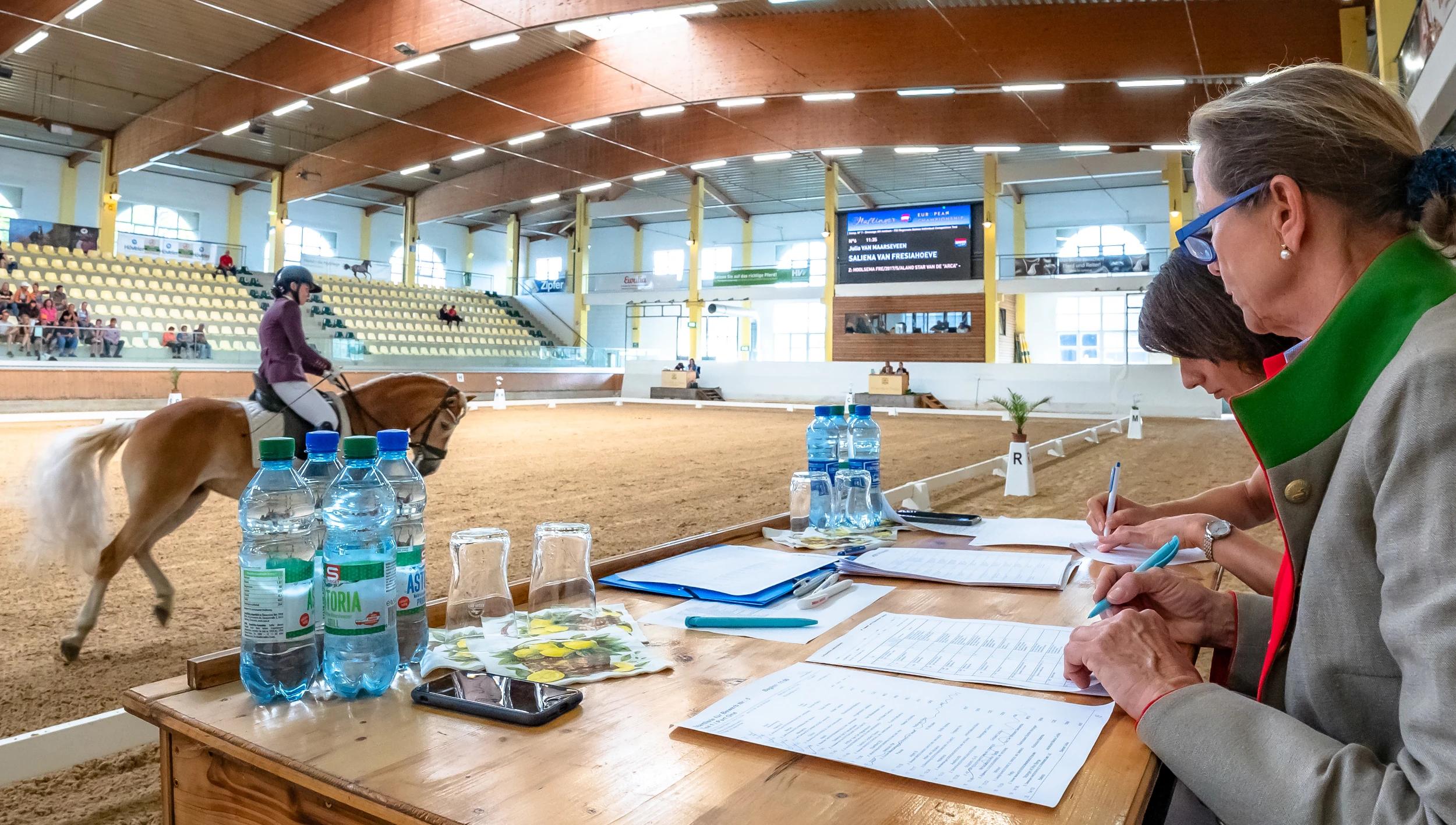
The Haflinger Sports Committee is made up of experts nominated by the member organisations. Its core consists of members from the historical breeding regions to ensure a close connection to the Haflinger’s roots. One of its first duties involved drawing up a tailor-made set of regulations for admission to the European Haflinger Championships.
Other tasks of the Haflinger Sports Committee include:
Invitations to and the coordination of the Sports Committee are the responsibility of the WHBSF Secretary. The chair is generally held by the President; depending on the project, this role may however also be delegated to a member of the core group.
Professional exchange and international perspectives
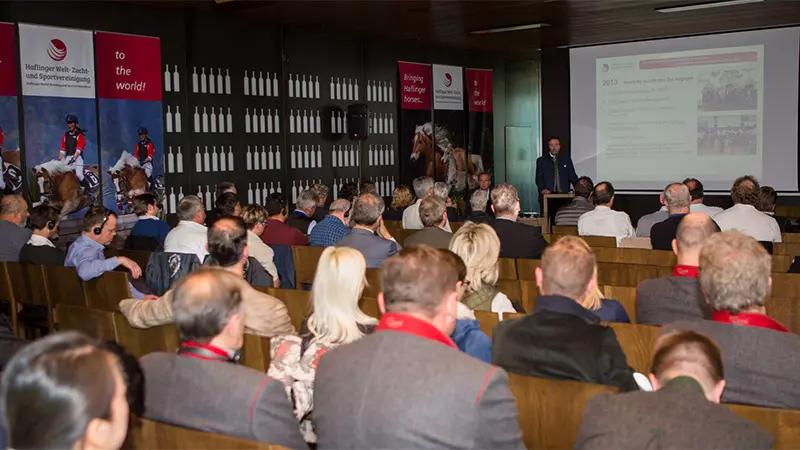
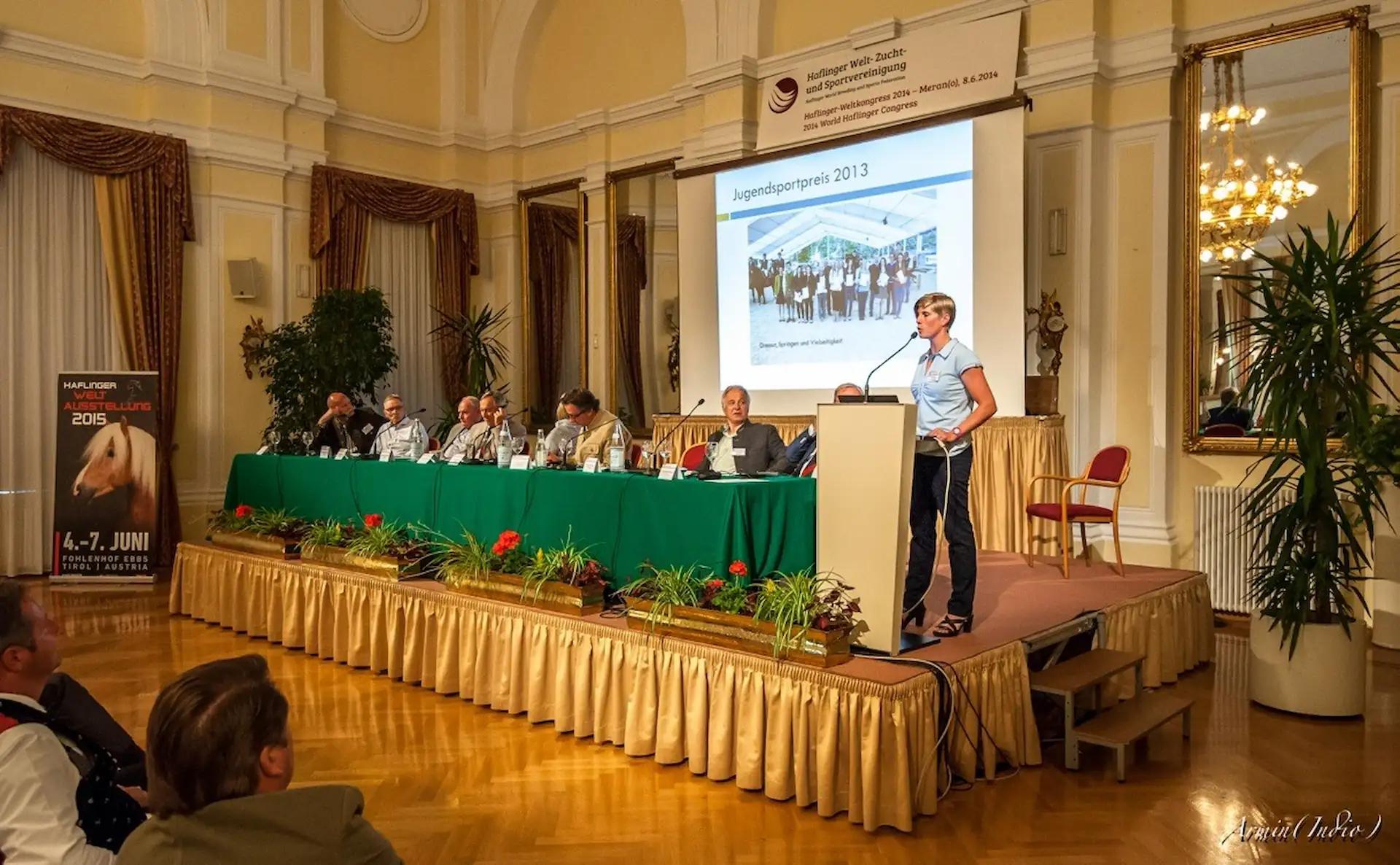
Conferences and meetings play a central role within the WHBSF, as they serve to bring together professional exchange and examine topics relating to Haflinger breeding from a variety of international perspectives. This view beyond national borders is precisely what creates significant added value for all parties involved: It offers a platform on which to compare experiences, fill knowledge gaps and gain new insights with regard to breeding, health and sport.
Congresses and conferences are a well-established and hugely popular format for meetings to discuss current developments in Haflinger breeding. Topics covers everything from health and research to fostering new talent and sports. Discussion panels are purposefully made up of international and interdisciplinary participants – here, breeders, vets, officials, scientists and representatives from the sport and youth work sectors work closely together.
The first International Seminar took place as early as 2013 at Peter Zimmermann’s Haflinger Centre in Trachselwald, Switzerland. It was followed by conferences in Merano/Meran, Ebbs and Sluderno/Schluderns – each generating a strong international response and providing valuable momentum for the continuing development of the breed.
Another fixed date in the calendar is the WHBSF’s Annual General Meeting, which takes place every year in late September at the Fohlenhof Ebbs stud farm. It sets the organisational and strategic framework for passing resolutions, developing projects and strengthening international cooperation.
Discover more topics